
Built for Breweries
Best Composter for Breweries and Spent Grain
Turn spent grain, spent hops, taproom food scraps, coffee grounds, and suitable brewery organics into valuable compost with a premium stainless steel system designed for breweries, taprooms, brewpubs, hotels, resorts, and hospitality properties.
- ✓Divert a practical portion of brewery organics onsite
- ✓Manage wet grain with mixing, insulation, aeration, and monitoring
- ✓Create compost for landscaping, gardens, or community use
Designed from more than 40 years of hands-on composting experience to address poor mixing, excess moisture, heat loss, inconsistent aeration, weak materials, and short service life.

Designed for suitable spent grain, hops, taproom scraps, coffee grounds, and browns.
An enclosed rotary system suited to professional brewery and hospitality environments.
Mixing, insulation, aeration, and monitoring help manage wet, dense material.
304 stainless steel construction for long-term outdoor use and a premium appearance.
Designed Around Brewery Reality
Spent grain is valuable, but it becomes difficult to manage quickly
Onsite composting succeeds when the system matches actual grain volume, brew frequency, staff capacity, access to dry browns, and the intended use for finished compost.
Dense material can restrict airflow and become anaerobic when it is left unmixed.
Farmer collection can vary with season, demand, distance, and scheduling.
Spent grain can sour rapidly, making prompt processing important.
Wet grain needs dry carbon-rich material for moisture balance and structure.
The workflow must be understandable, repeatable, and practical on brew days.
Many breweries benefit most from partial diversion or a defined onsite program.
Is Durvela Right for Your Brewery?
Start with the material stream, not the brewery label
Durvela can be a strong fit when you have a manageable quantity of organics, dependable access to dry browns, a suitable location, staff who can follow a simple routine, and a plan for the finished compost.
It is especially useful for partial spent-grain diversion, uncollected grain, taproom and kitchen organics, seasonal pickup interruptions, demonstration programs, and breweries with gardens or landscaping.
A reliable farmer pickup program does not need to be replaced. Durvela can complement it by giving the brewery more control over material that would otherwise be stored, hauled, or discarded.
A Practical Brewery Workflow
Five repeatable steps from brewery organics to finished compost
Wet spent grain should be processed promptly and mixed with enough dry material to maintain structure and airflow.
Separate the portion of spent grain, hops, coffee grounds, and taproom scraps selected for composting.
Blend in clean shredded cardboard, dry leaves, untreated sawdust, wood shavings, or wood pellets.
Avoid loading a dense mass of wet grain without enough dry structure and air space.
Mix the contents and check temperature, moisture, and airflow as the material changes.
Move mature material to curing before using it in landscaping, gardens, or growing projects.
Best Fit
Well suited to defined, repeatable brewery composting programs
The best applications are those where the brewery knows what material will be composted, how often it will be loaded, where browns will come from, and how finished compost will be used.
Engineered for Wet, Dense Organics
Features that address the reasons spent-grain composting fails
Spent grain needs more than storage. Durvela helps create a managed environment for blending wet material with dry browns, retaining heat, introducing air, and observing the process.
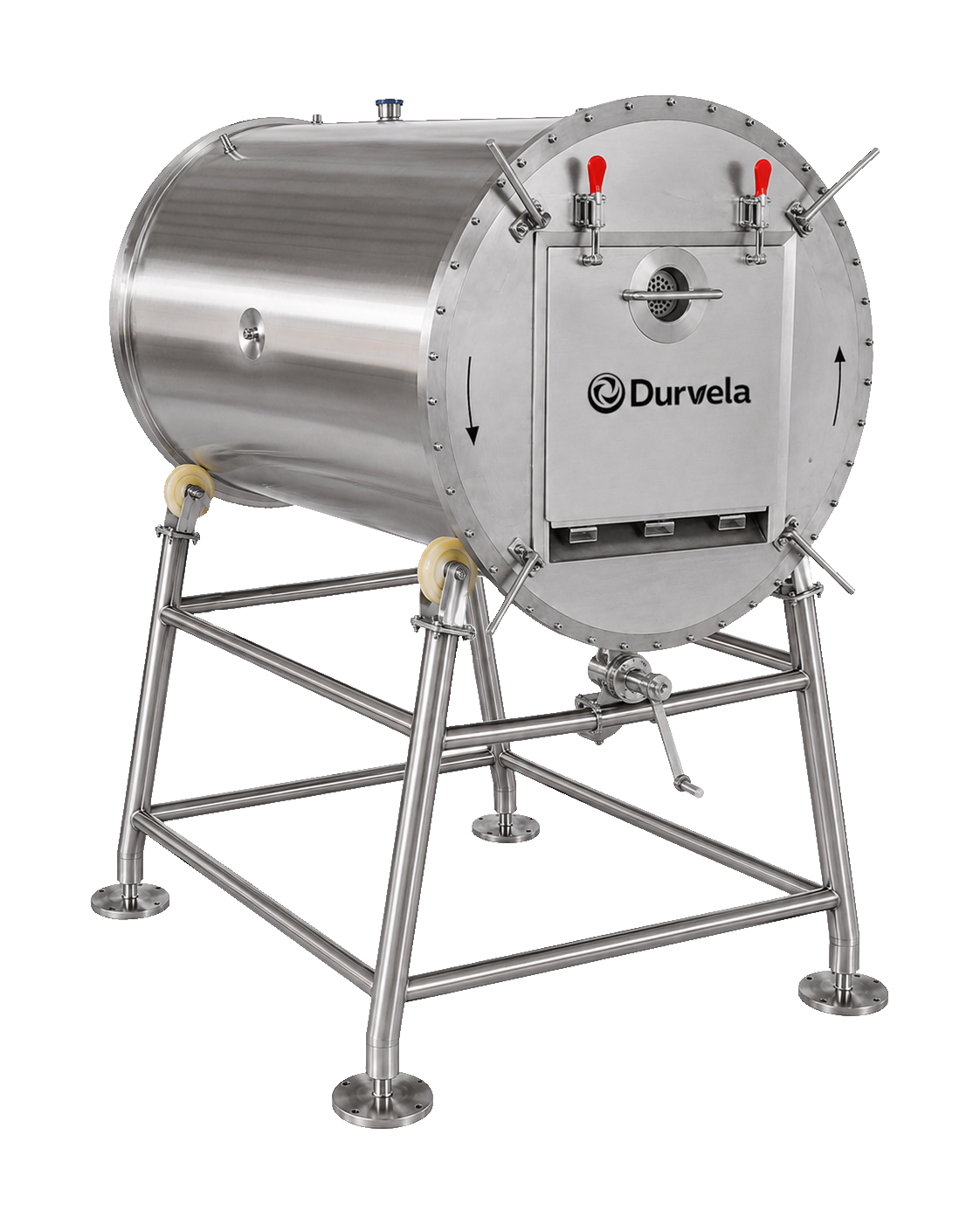
Durable, easy-clean materials and a professional appearance for brewery properties.
Helps retain biologically generated heat through cool weather and overnight temperature changes.
Helps break up dense grain and distribute dry browns more evenly.
Supports aerobic conditions and helps reduce the anaerobic conditions associated with strong odours.
Provides useful feedback about whether biological activity is increasing, stable, or declining.
The Brown-Material Requirement
Confirm your dry carbon source before choosing a brewery composter
Potential brewery browns
- Clean shredded corrugated cardboard
- Dry leaves and landscaping material
- Untreated sawdust or wood shavings
- Wood pellets used as an absorbent carbon source
Material to assess carefully
- Waxed or plastic-coated cardboard
- Food-soiled packaging with non-compostable liners
- Painted, treated, or contaminated wood products
- Any material restricted by local composting rules
Why it matters
Spent grain is wet and dense. Dry browns absorb moisture, add carbon, create pore space, and help the mix resist compaction.
Build a balanced compost mixWhy Breweries Compost Onsite
Turn a defined organic stream into an operating and sustainability asset
Create a practical outlet when farmer pickup or hauling does not cover every batch.
Support hop yards, chef gardens, landscaping, community gardens, or partner growers.
Give guests and staff a visible example of brewery organic waste reduction.
Use durable stainless steel equipment instead of repeatedly replacing basic outdoor bins.
Compare Brewery Organic Waste Options
Durvela can complement—not automatically replace—your existing outlets
The strongest strategy may combine farmer pickup, hauling, and onsite composting according to volume and operational needs.
| Consideration | Durvela | Farmer pickup | Organics hauling | Open bin or pile |
|---|---|---|---|---|
| Material retained onsite | ✓ | Usually no | No | ✓ |
| Produces compost for brewery use | ✓ | No | No | ✓ |
| Enclosed mechanical mixing | ✓ | Not applicable | Not applicable | ◐ |
| Recurring collection dependency | Low | High | High | Low |
| Suitable for very high grain volume | Assess capacity | Often | Often | Site dependent |
| Professional site appearance | High | High | High | Variable |
Recommended Brewery Sizes
Size by weekly material volume—not by brewhouse label alone
Estimate grain per brew, brews per week, percentage to be composted, taproom organics, added browns, loading schedule, and retention time. A five-barrel brewery brewing daily may need a different strategy than a larger brewery brewing occasionally.
 Durvela 300300 L / 79 USG1380 × 1100 × 1610 mm / 55 × 44 × 64 inTaproom scraps, coffee grounds, test programs, gardens, and low-volume partial diversion.
 Durvela 900900 L / 238 USG2180 × 1200 × 1800 mm / 86 × 47 × 71 inRegular taproom organics, lower-volume spent-grain diversion, and small brewpub programs.
 Durvela 20002000 L / 528 USG3140 × 1350 × 1940 mm / 124 × 53 × 76 inLarger partial-diversion programs, brewpub kitchens, resorts, and mixed organic streams.
Return on Use
Measure the value of the portion you can reliably divert
Value may come from reduced disposal or hauling, fewer emergency pickups, onsite compost production, reduced purchased soil amendments, and a more visible sustainability program.
Actual savings depend on local collection arrangements, labour, carbon-source costs, loading volume, and how the compost is used.
Calculate Your DiversionRecommended Brewery Accessories
Monitor heat and support airflow through wet brewery organics
Spent grain can compact and hold substantial moisture. Monitoring and active aeration can make the process easier to assess and adjust.
Monitor internal temperature without repeatedly opening the system and use the reading as feedback about biological activity.
View thermometer → Composter Aeration KitAdd active airflow where wet, dense materials or local operating conditions require additional oxygen support.
View Composter Aeration Kit → Stainless Steel Compost Pull HoeReach into the unloading area to pull finished compost forward for easier removal, handling, and transfer to curing or use.
View compost pull hoe →Why Durvela Costs More
Built as long-term commercial composting equipment
Durvela costs more than a basic bin because it combines durable stainless steel, insulation, mechanical mixing, aeration, monitoring capability, and long-term parts support in equipment designed to remain useful for years.
Built to Last
Backed by commercial warranty and replacement support
Durvela is designed for breweries, brewpubs, taprooms, resorts, and hospitality properties seeking durable materials and confidence after purchase.
Founder Perspective
Designed to solve the problems that cause composting systems to be abandoned
“After more than 40 years of composting, I designed Durvela to address poor mixing, poor aeration, heat loss, weak materials, and short service life.”
Brewery Composting FAQ
Common questions about spent grain and onsite composting
Can spent grain be composted?
Yes. Spent grain can be composted, but it is wet and dense. Process it promptly and mix it with enough dry carbon-rich material to improve moisture balance, structure, and airflow. Use the composting calculator as a starting point for balancing materials.
Can a brewery compost all of its spent grain onsite?
Possibly, but not in every operation. Capacity depends on grain per brew, brews per week, the percentage selected for composting, added browns, retention time, labour, and available equipment. Many breweries will find partial diversion more practical than full diversion.
Does spent grain smell?
Wet spent grain can sour quickly when it remains compacted and without oxygen. Prompt mixing with dry browns, appropriate moisture, airflow, and regular rotation help reduce the anaerobic conditions associated with strong odours.
Is composting better than farmer pickup?
Not automatically. A reliable farmer relationship can remain an excellent outlet. Durvela can supplement it by handling uncollected grain, taproom organics, interruptions, pilot diversion, or material intended for onsite compost production.
How should a brewery choose a Durvela size?
Size by actual weekly material volume rather than the brewery's brewhouse label. Include grain per brew, brew frequency, percentage diverted, taproom organics, added browns, and retention time. Use the size guide or request a capacity assessment.
What dry browns can be mixed with brewery organics?
Potential options include clean shredded corrugated cardboard, dry leaves, untreated sawdust, wood shavings, wood pellets, and dry landscaping material. Avoid contaminated, coated, waxed, or otherwise unsuitable materials.
Can spent hops be composted?
Yes. Spent hops can be included as part of a balanced mix. As with wet grain, combine them with suitable browns and manage moisture, oxygen, and mixing.
Can breweries compost year-round?
Durvela's insulated drum helps retain biologically generated heat, supporting more consistent conditions through cool weather. See the cold-climate composting guide.
Helpful brewery composting resources
Build a Practical Brewery Diversion Plan